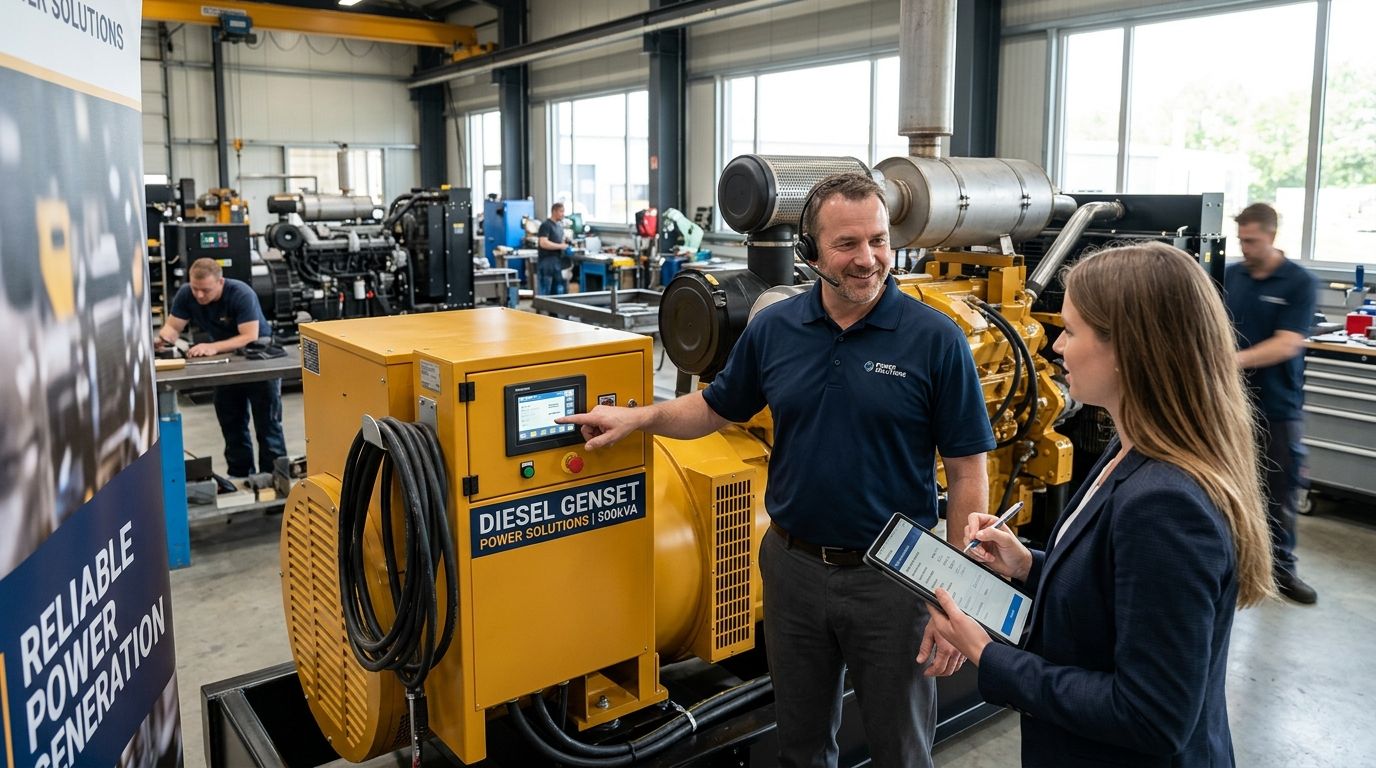
Lead generation for generator and genset manufacturers means identifying and engaging the buyers actively specifying, replacing, or expanding backup power capacity — EPC firms, data center operators, rental fleets, government agencies, and OEM dealers — then converting that intent into a qualified sales conversation before a distributor gets there first. Genset buying cycles run longer and involve more stakeholders than most industrial categories, which changes how lead generation has to work.
- Lead generation for generator and genset manufacturers works best when it targets active project signals, not generic firmographic lists.
- Supplyco pairs AI account targeting with automated quoting and follow-up so identified buyers get a quote before a competitor calls back.
- Manual research caps a rep at roughly 15-20 qualified accounts a week; AI-assisted targeting raises that ceiling without adding headcount.
- Genset sales cycles for data center and EPC deals often run 6-12 months, so follow-up cadence matters as much as initial lead volume.
- Vendors that hand over contact lists but stop short of quoting and CRM sync leave a gap where manufacturer leads go cold.
Why lead generation matters for generator and genset manufacturers
Genset manufacturers sell into fragmented, project-driven demand. A data center buildout, a hospital backup power mandate, and a construction rental fleet renewal all generate genuine purchase intent, but none of them show up in a standard contact database the way a SaaS renewal or a retail reorder would.
The buyer roster is also wider than most industrial categories. EPC firms specify equipment during design. Facilities managers replace aging units on their own timeline. Rental fleets buy in batches tied to utilization data. Government and telecom buyers move on procurement cycles measured in quarters, not weeks. Lead generation for generator and genset manufacturers has to account for all four groups without treating them like one audience.
Sales teams that rely on generic list-building tools end up with contacts, not context — a name and a title, no signal on whether that account has an active project. Supplyco builds account targeting around the specific project and application signals genset buyers throw off before they ever fill out a form.
Define your ideal genset buyer profile
Before any outreach, segment buyers by application and by unit size — a 20kW standby unit for a small facility and a 2MW prime power installation for a data center are different sales motions with different decision-makers.
- Segment by application: standby, prime power, rental/portable, marine, telecom backup, data center, healthcare
- Segment by kVA/kW range and fuel type (diesel, natural gas, dual-fuel)
- Map the buying committee per segment: facilities engineer, EPC specifier, procurement, fleet manager
- Flag replacement-cycle accounts separately from new-build accounts
- Note which segments buy through distributors versus direct from the OEM
Manufacturers that skip this step chase every inbound inquiry the same way in 2026, which slows down the reps who should be prioritizing a multi-megawatt data center deal over a single-unit inquiry.
Build target account lists around project signals
Static lists go stale fast in this category. A facility that had no genset need last quarter can have an active RFQ this quarter because of a new construction permit or a grid reliability mandate.
- Pull EPC bid boards and public construction permit filings for projects requiring backup power
- Track fleet rental company announcements about capacity expansion
- Monitor data center construction pipelines in your target regions
- Flag utility outage mandates or regulatory changes that trigger backup power purchases
- Cross-reference distributor territory gaps where no rep currently owns the account
This is manual, spreadsheet-heavy work when done by hand, and most reps do it in the gaps between calls rather than as a structured process. Once the account universe is built, an AI sales agent software for industrial manufacturers can monitor these signals continuously and flag accounts the moment a signal appears, instead of a rep rediscovering them weeks later.
Build the ideal customer profile before you scale outreach
Genset manufacturers that scale outreach before locking an ICP end up with a pipeline full of poor-fit accounts — small facilities that never buy above a single unit, or buyers already locked into a distributor contract.
- Score past deals by unit size, application, and sales cycle length to find the pattern
- Weight EPC-influenced deals differently from direct facility purchases
- Exclude accounts already served by an existing distributor relationship
- Set a minimum project size threshold that matches your rep capacity
- Revisit the profile quarterly as fuel type demand shifts between diesel and natural gas
A documented ideal customer profile for manufacturers keeps outreach focused on accounts that convert instead of every warm body that filled a form.
Qualify inbound leads before a rep ever calls
Inbound leads on generator and genset sites split into three buckets: someone spec'ing a real project, someone comparing options for a future budget cycle, and someone who will never buy above one unit. Treating all three the same wastes rep hours.
- Ask for application, unit size range, and timeline on every form
- Route rental/portable inquiries to a separate track from capital equipment inquiries
- Check whether the inquiry ties to a known EPC or distributor account already in the pipeline
- Flag urgency signals, since outage-driven inquiries move faster than planned upgrades
- Score by project size before assigning to a rep
The manual version is a rep reading every form submission and guessing at fit. Teams following a documented process for qualifying inbound leads cut the time between inquiry and first qualified call, which matters most when a buyer is also requesting quotes from two distributors.
Route qualified leads to the fastest quote path
Genset buyers comparing OEMs and distributors often award the deal to whoever quotes first with the right configuration, not necessarily the lowest price. Quote turnaround is a competitive lever, not just an operations metric.
- Standardize configuration rules by application so reps aren't re-deriving specs each time
- Pre-approve common configurations to skip manual engineering sign-off on standard units
- Track quote turnaround time by segment and flag the slow spots
- Give reps a fallback quote template for RFQs that arrive outside business hours
- Push accepted quotes straight into order entry instead of rekeying them
Manufacturers that automate quoting logic instead of routing every configuration through engineering get faster turnaround on standard configurations, which frees engineering time for genuinely custom units.
Automate follow-up across the long sales cycle
A 6-12 month EPC or data center sales cycle means a lead generated in January 2026 can still be open in September 2026. Most CRMs are not built to keep a cadence alive that long without a rep manually setting reminders.
- Set a follow-up cadence tied to project milestones, not calendar days
- Re-engage stalled quotes with updated lead times or configuration options
- Track which accounts went dark and why before writing them off
- Sync follow-up activity back to the account record so the next rep touch has context
Built-out sales follow-up automation for manufacturers keeps these long cycles alive without a rep tracking dozens of open deals in a spreadsheet.
Compare your lead generation options
| Option | Best for | Key limitation |
|---|---|---|
| Manual research and spreadsheets | Small teams with 1-2 reps and a narrow territory | Caps at roughly 15-20 qualified accounts per rep weekly, no signal monitoring |
| Generic contact list providers such as ZoomInfo | Building broad contact coverage fast | Static contact data with no project signal specific to genset buyers |
| LinkedIn Sales Navigator | Manual outbound to named accounts | Requires manual signal-checking per account, no quoting or ERP integration |
| Supplyco | Manufacturers that need signal-based targeting tied to quoting and follow-up | Designed to run alongside an existing ERP/CRM rather than replace it |
Generator and genset manufacturers get the most from lead generation when the same system that finds the buyer also feeds the quote and the follow-up cadence — a standalone contact list with no downstream automation just moves the bottleneck.
See AI lead targeting in action
Built for industrial manufacturers running long, multi-stakeholder sales cycles.
Common mistakes generator and genset manufacturers make
- Treating rental fleet buyers like one-time capital buyers. Fleet purchases are batch decisions tied to utilization data, not single-unit RFQs, and outreach that ignores this gets ignored back.
- Ignoring EPC bid boards and public permit filings. By the time a facilities manager submits an inbound form, the EPC firm may have already specified a competitor's unit during design.
- Slow quote turnaround on standard configurations. Losing a standby unit deal to a distributor over a two-day quote delay is common and avoidable.
- No cadence built for 6-12 month cycles. Leads generated early in 2026 go cold by Q3 without follow-up tied to project milestones rather than calendar reminders.
- Scoring every application the same. A marine genset inquiry and a data center inquiry need different qualification questions, and scoring them identically buries the higher-value lead.
FAQ
What is the best way to generate leads for generator and genset manufacturers?
The best approach combines project signal monitoring — EPC bid boards, construction permit filings, fleet expansion news — with fast quote turnaround once a lead is qualified. Static contact lists without signal tracking miss most active genset buyers until a competitor has already quoted them.
Is AI-based lead generation better than list tools like ZoomInfo for genset manufacturers?
AI-based targeting suits genset manufacturers better because it tracks project and application signals specific to backup power demand, while ZoomInfo-style tools mainly supply static firmographic contact data. Pairing signal-based targeting with quoting automation closes the gap that pure contact lists leave open.
How long is the typical sales cycle for genset manufacturers?
Data center and EPC-driven genset deals commonly run 6-12 months from first contact to order, while rental and standby replacement deals close faster. Length depends heavily on unit size and whether an EPC firm controls the specification.
Do genset manufacturers need a CRM in addition to lead generation tools?
Yes. Lead generation identifies and prioritizes buyers, but a CRM or a platform that syncs into one is what keeps a 6-12 month follow-up cadence alive across multiple stakeholders on the same deal.
How do you find EPC firms actively bidding on generator projects?
Public construction permit filings and EPC bid boards surface active projects requiring backup power before the facility owner submits an inbound inquiry. Monitoring those sources continuously, rather than checking them manually, catches signals earlier in the buying cycle.
Should genset manufacturers target data center buyers differently than standby power buyers?
Yes. Data center buyers involve larger unit sizes, longer cycles, and EPC-driven specification, while standby buyers at smaller facilities decide faster with fewer stakeholders. Routing both segments identically slows the higher-value data center pipeline.
Can AI sales agents replace reps for genset quoting?
AI sales agents handle signal monitoring, lead qualification, and quote generation for standard configurations, but engineered-to-order units still need engineering sign-off and rep involvement. The value is freeing reps from manual research so they spend time on qualified, high-value accounts.
What signals indicate a genset buyer is ready to purchase?
Active construction permits requiring backup power, EPC bid activity naming a facility, fleet capacity expansion announcements, and outage-driven inquiries all indicate near-term intent. A firmographic match with no project signal is not the same as a ready buyer.
One last thing
The generator and genset manufacturers losing deals in 2026 usually aren't losing on price or unit quality — they're losing on the gap between signal and quote. A buyer with an EPC-specified project won't wait for a rep to notice a permit filing three weeks later, and Supplyco ties account targeting directly to quoting and follow-up specifically to close that gap rather than adding another disconnected contact list to the stack.


