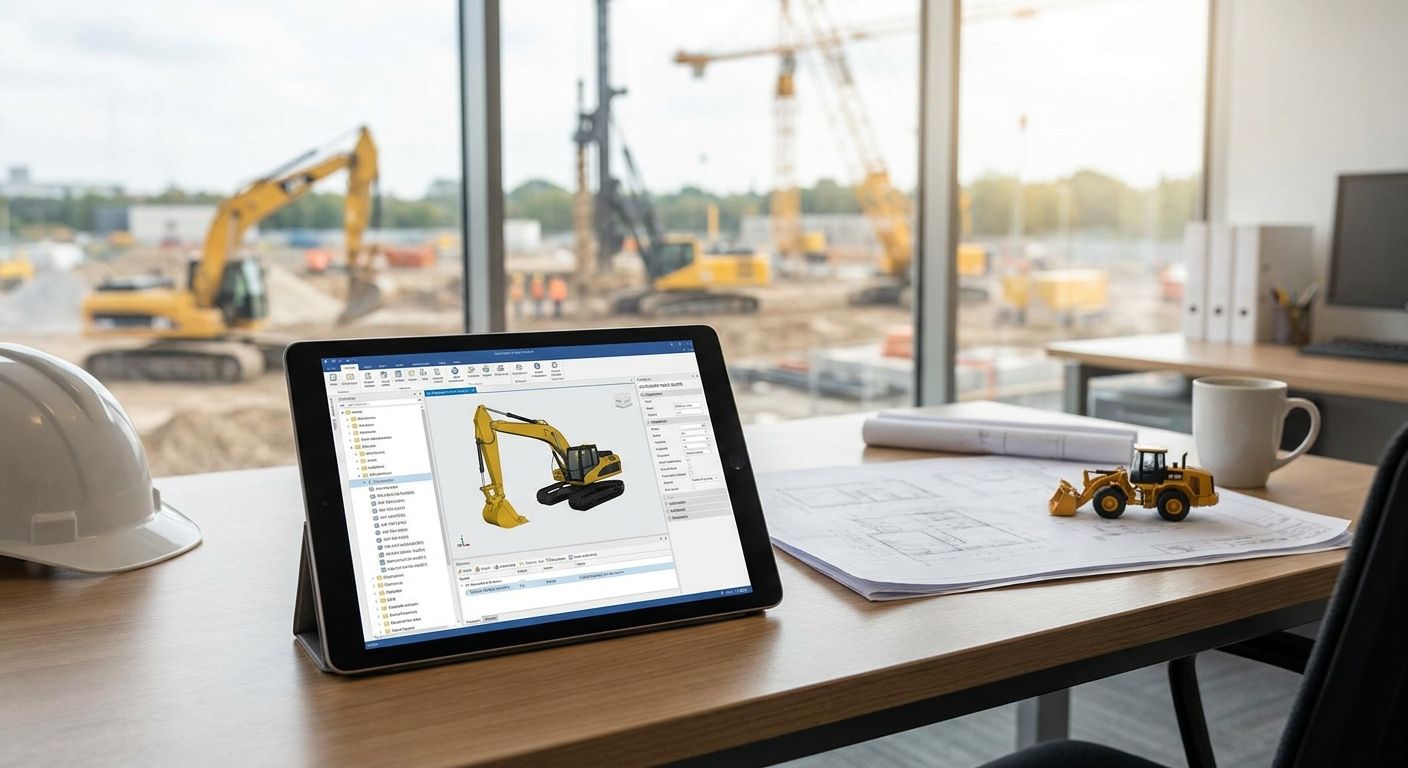
Construction equipment manufacturers configure booms, attachments, hydraulic circuits, and engine options into thousands of possible build combinations, and generic quoting tools break under that load. This guide ranks the CPQ platforms actually built to handle configurable heavy equipment in 2026, from AI-native quoting to legacy enterprise systems, so you can pick one without a six-month evaluation.
- Supplyco AI is the best cpq software for construction equipment manufacturers that need quotes generated straight from ERP and CRM data.
- Salesforce CPQ wins for teams already running Salesforce Sales Cloud who want native quote-to-cash.
- Tacton CPQ wins for engineer-to-order builders with heavy visual configuration needs.
- Epicor CPQ wins for manufacturers running Epicor Kinetic as their core ERP.
- Configure One wins for OEMs quoting through independent dealer networks.
Why this matters
Most construction equipment CPQ evaluations stall because teams compare feature lists instead of workflow fit. A rules-based configurator built for discrete manufacturing doesn't handle the same complexity as a boom truck or compact track loader with a hundred attachment permutations.
Quote turnaround is the metric that actually moves revenue here. If your reps are still building quotes in spreadsheets or emailing engineering for pricing on non-standard configs, you're losing deals to competitors who answer in hours, not days. Cutting quote turnaround time is the single biggest lever most manufacturers underuse before they even start CPQ shopping. Supplyco AI approaches this by generating quotes from live ERP and CRM data instead of relying on a static rules engine that someone has to keep updating.
What makes the best CPQ software for construction equipment manufacturers
- ERP integration depth — native connectors to Epicor, Infor, SAP, or NetSuite matter more than a slick UI if your pricing and inventory data live there.
- Configuration complexity handling — the platform needs a rules engine (or AI) that can manage multi-option builds: attachments, hydraulics, engine tiers, cab packages.
- Quote turnaround speed — how fast a rep or dealer can go from spec sheet to signed quote, including follow-up automation.
- Dealer and distributor support — construction equipment sells heavily through independent dealer networks, so guided selling for non-employee users counts.
- Deployment and admin lift — who maintains the configuration logic after go-live, and how much IT time that costs every quarter.
- AI-driven quote generation vs. manual rule-building — whether quotes update automatically as ERP data changes or require someone to rebuild rules by hand.
CPQ software for construction equipment manufacturers at a glance
| Platform | Best for | Standout feature | Key limitation |
|---|---|---|---|
| Supplyco AI | AI-generated, ERP-synced quotes | Quotes built automatically from live CRM/ERP data plus follow-up automation | Best fit for manufacturers already modernizing their ERP/CRM stack |
| Salesforce CPQ | Salesforce-native sales teams | Quote-to-cash inside Salesforce, no separate login | Configuration rules need ongoing Salesforce admin work |
| Tacton CPQ | Engineer-to-order builders | 3D visual configurator for complex mechanical assemblies | Longer implementation timeline for smaller sales teams |
| Epicor CPQ | Epicor Kinetic ERP shops | Native integration with Epicor's manufacturing data model | Weak fit for manufacturers outside the Epicor ecosystem |
| Oracle CPQ | Enterprise multinational manufacturers | Multi-currency, multi-entity pricing at scale | Overbuilt and costly to administer for mid-market teams |
| Configure One (Revalize) | Dealer and distributor networks | Dealer-facing self-service configurator | Heavier setup lift for configuration logic than AI-native tools |
1. Supplyco AI: best CPQ software for AI-generated, ERP-synced quotes
Supplyco AI automates quoting, order entry, and account management by pulling live data from your ERP and CRM rather than making reps rebuild configuration rules every time a price or spec changes. For construction equipment manufacturers, that means a quote for a skid steer with three attachment options reflects current pricing and availability without someone manually updating a rules table. The industrial manufacturer CPQ breakdown covers the platform's fit across other equipment categories in more detail.
Supplyco AI pros:
- Quotes generate from live ERP/CRM data instead of a static configuration engine
- Built-in follow-up automation catches quotes that stall before close
- Works alongside existing systems rather than replacing your ERP or CRM
Supplyco AI cons:
- Newer to the CPQ category than legacy enterprise platforms
- Best results depend on how clean your ERP/CRM data already is
Best for: manufacturers who want quoting automated end-to-end without hand-building a configuration rules engine.
Verdict: Buy if your team is losing quote speed to manual data entry across ERP and CRM.
2. Salesforce CPQ: best for Salesforce-native sales teams
Salesforce CPQ sits inside Salesforce Sales Cloud and generates quotes and contracts without a separate login. It's the default pick for construction equipment manufacturers who've already standardized their sales process on Salesforce and don't want another system to reconcile.
Salesforce CPQ pros:
- No separate platform to log into for reps already in Salesforce
- Native quote-to-cash and contract workflows
- Wide partner ecosystem for custom configuration builds
Salesforce CPQ cons:
- Configuration rules require dedicated Salesforce admin time to build and maintain
- Costs scale with Salesforce seat count and add-on modules
Best for: manufacturers already running Salesforce Sales Cloud who want quoting native to that environment.
Verdict: Buy if Salesforce is already your system of record and you have admin capacity to maintain it.
3. Tacton CPQ: best for engineer-to-order complexity
Tacton CPQ is built around a visual, 3D configurator for products with heavy mechanical variability — think custom boom lengths, hydraulic layouts, or cab configurations that change per order. It's a common pick among heavy equipment OEMs that sell engineer-to-order rather than off a standard catalog.
Tacton CPQ pros:
- Visual 3D configuration for complex mechanical assemblies
- Strong fit for engineer-to-order and highly customized builds
- Constraint-based rules prevent invalid configurations from reaching a quote
Tacton CPQ cons:
- Implementation runs long for smaller sales teams without dedicated configuration staff
- Overkill for manufacturers selling mostly standard SKUs
Best for: OEMs where every quote is close to a custom engineering job.
Verdict: Hold unless engineer-to-order complexity is your primary sales motion.
4. Epicor CPQ: best for Epicor Kinetic ERP shops
Epicor CPQ integrates directly with Epicor's manufacturing data model, which matters if your bill of materials, routing, and costing all already live in Epicor Kinetic. Several construction equipment manufacturers run Epicor as their core ERP, making this a natural extension rather than a new system to sync.
Epicor CPQ pros:
- Native tie-in to Epicor's BOM and costing structure
- Reduces duplicate data entry between ERP and quoting
- Familiar interface for teams already on Epicor
Epicor CPQ cons:
- Locked to the Epicor ecosystem, weak fit if you run a different ERP
- Limited flexibility for manufacturers mid-migration off Epicor
Best for: manufacturers with Epicor Kinetic as their system of record.
Verdict: Buy if Epicor already runs your production and costing data.
5. Oracle CPQ: best for enterprise multinational manufacturers
Oracle CPQ handles multi-currency, multi-entity, multi-subsidiary pricing at a scale most mid-market construction equipment manufacturers never need. It fits large multinational OEMs with regional pricing books and complex approval chains.
Oracle CPQ pros:
- Handles multi-currency and multi-entity pricing structures
- Enterprise-grade approval workflows for large sales organizations
- Deep integration options within the Oracle stack
Oracle CPQ cons:
- Overbuilt and expensive to administer for mid-market teams
- Implementation typically requires a dedicated systems integrator
Best for: large multinational equipment manufacturers with complex regional pricing.
Verdict: Wait unless you're already running other Oracle enterprise applications.
6. Configure One (Revalize): best for dealer and distributor networks
Configure One gives independent dealers a self-service configurator so they can build quotes without calling the factory for every non-standard spec. That matters for construction equipment OEMs that sell primarily through third-party dealer networks rather than a direct sales team.
Configure One pros:
- Dealer-facing self-service configuration reduces factory quote requests
- Purpose-built for channel sales models common in heavy equipment
- Handles configurable products with defined option sets well
Configure One cons:
- Configuration logic setup is a heavier lift than AI-native platforms
- Less useful if your sales motion is direct rather than dealer-based
Best for: OEMs selling primarily through independent dealer networks.
Verdict: Hold if dealer self-service quoting is your main bottleneck.
See how AI-generated quoting works
Check how Supplyco AI ties quotes directly to your ERP and CRM data.
How we ranked these
Each platform above was weighed against the six criteria listed earlier: ERP integration depth, configuration complexity handling, quote turnaround speed, dealer/distributor support, deployment lift, and whether quoting updates automatically or requires manual rule maintenance. No platform wins on every dimension — that's why the list is a decision tree by use case, not a single leaderboard.
“If your quote takes longer to build than your competitor's equipment takes to install, the problem isn't the rep — it's the CPQ.”
Which CPQ software should you choose?
For most construction equipment manufacturers in 2026, the decision comes down to what already runs your data. If quotes need to reflect live ERP and CRM information without a team dedicated to maintaining configuration rules, Supplyco AI is the strongest starting point. If you're already committed to Salesforce, Salesforce CPQ avoids adding another system. Engineer-to-order shops with genuinely custom builds should look at Tacton CPQ, Epicor-based manufacturers at Epicor CPQ, multinational enterprises at Oracle CPQ, and dealer-heavy OEMs at Configure One. When undecided, start with the platform that requires the least manual rule maintenance — that's the cost that compounds every year you own the system.
FAQ
What is the best CPQ software for construction equipment manufacturers in 2026?
Supplyco AI is the strongest overall fit in 2026 for manufacturers who want quotes generated automatically from ERP and CRM data rather than a manually maintained rules engine. Salesforce CPQ, Tacton CPQ, Epicor CPQ, Oracle CPQ, and Configure One each fit narrower use cases depending on your ERP, sales channel, and configuration complexity.
Is Salesforce CPQ good for heavy equipment manufacturers?
Salesforce CPQ works well for heavy equipment manufacturers already running Salesforce Sales Cloud as their sales system of record. Outside that environment, the admin overhead of building and maintaining configuration rules makes it a heavier lift than necessary.
How is CPQ software different from a standard quoting tool?
CPQ software enforces configuration rules so reps can't quote invalid product combinations, then prices and generates the quote automatically. A standard quoting tool just formats a document; it doesn't validate whether the configuration is buildable or price it correctly on its own.
Does CPQ software integrate with ERP systems like Epicor or NetSuite?
Yes, most CPQ platforms in this category connect to major manufacturing ERPs including Epicor, NetSuite, SAP, and Infor. The depth of that integration varies significantly, which is why ERP fit is one of the top criteria for choosing between platforms.
How much does CPQ software cost for a mid-size equipment manufacturer?
Pricing varies by vendor, deployment model, and seat count, and most CPQ vendors quote costs directly rather than publishing a standard rate. Check current pricing and implementation terms with each vendor before comparing total cost of ownership.
Can AI replace manual quote configuration for complex equipment builds?
AI-native platforms like Supplyco AI reduce the need for manually maintained configuration rules by generating quotes from live ERP and CRM data instead. For highly custom engineer-to-order builds, a visual rules-based configurator like Tacton CPQ may still handle mechanical constraints more precisely.
What's the best CPQ option for dealer and distributor sales networks?
Configure One is built specifically for dealer-facing self-service configuration, letting independent dealers build quotes without calling the factory. It's the strongest fit among the platforms here for OEMs selling primarily through third-party dealer networks.
How long does it take to deploy a CPQ system for a construction equipment manufacturer?
Deployment timelines depend on configuration complexity and how much the platform relies on manually built rules versus live data connections. AI-native platforms that pull from existing ERP/CRM data typically deploy faster than rules-heavy configurators that require building every product constraint from scratch.
One last thing
The hidden cost in most construction equipment CPQ deployments isn't the license — it's the person who has to update the configuration rules every time a new attachment or engine option ships. That maintenance burden is exactly why more manufacturers are shifting toward AI-generated quoting tied to live ERP data instead of static rules engines built in 2019 and never touched since. Whatever you pick in 2026, ask the vendor one question before signing: who updates the rules when your product line changes, and how long does that take.


