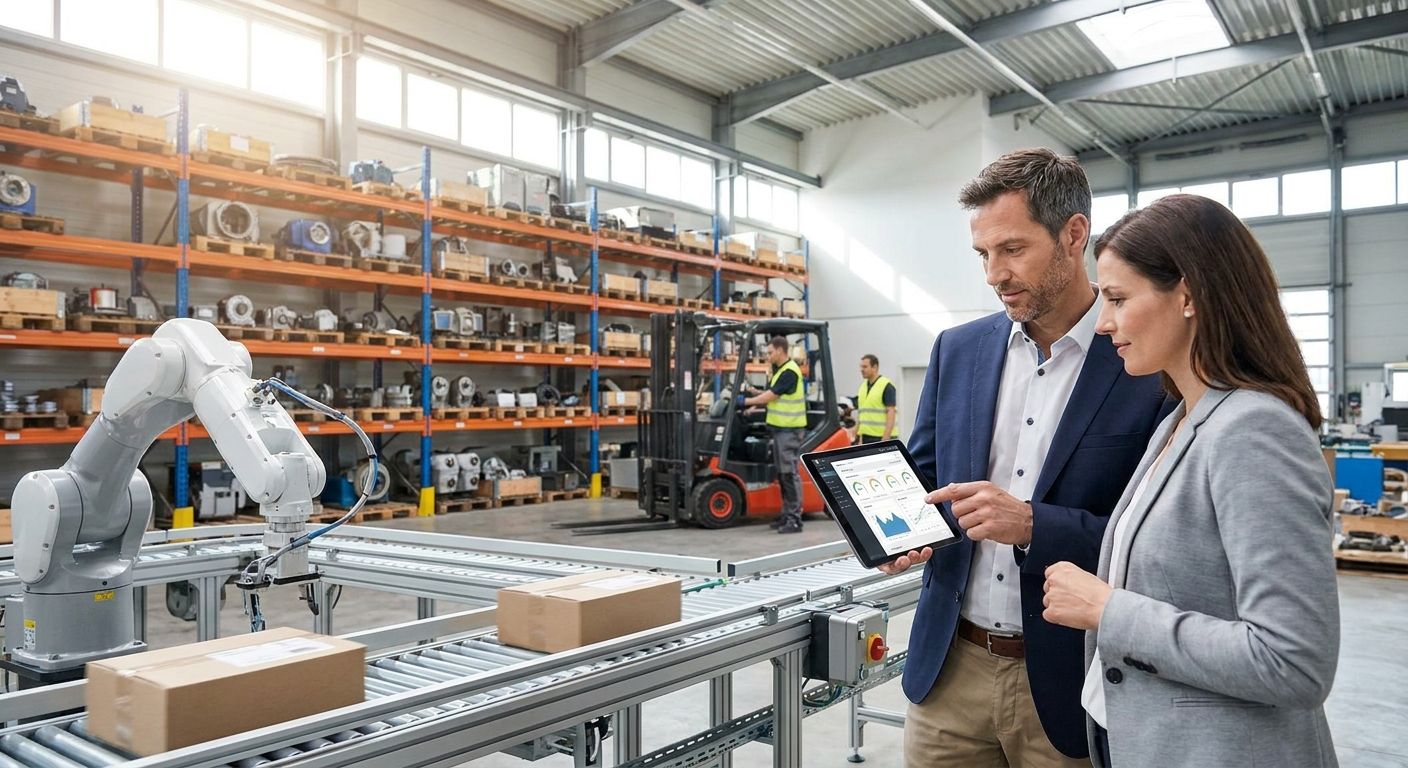
B2B sales automation for industrial distributors covers four workflows: quoting, order entry, account management, and follow-up. Those are the parts of the sales cycle that eat rep time without moving a single deal forward.
- B2B sales automation for industrial distributors should start with quoting and order entry, not lead scoring — buy for ERP write-back.
- SUPPLYCO automates quoting, order entry, account management, and follow-up inside your existing CRM and ERP — the safe pick for distributor sales teams.
- Skip standalone quoting tools that don't write orders back to your ERP; that gap is where reps rekey and margin leaks.
- Follow-up automation matters as much as quoting speed once a distributor's rep count outgrows manual account review.
Why this matters
Industrial distributor reps don't lose deals because they lack leads. They lose deals because a quote sits in a draft folder for three days while a competitor's quote lands in an hour.
Manual order entry compounds the problem. A rep keys a quote into a spreadsheet, then keys the accepted quote into the ERP by hand, and the two numbers don't always match. That mismatch shows up later as a pricing dispute, a short-shipped order, or a credit memo nobody wants to process.
Account coverage is the third leak. A distributor with more open accounts than a rep can review by memory ends up with dormant accounts that quietly move their spend to a competitor. None of this is a CRM problem — HubSpot and Salesforce log activity, they don't quote, key orders, or flag which account went cold. That's the gap b2b sales automation for industrial distributors is built to close.
Who this is for
This is for a VP of Sales or RevOps lead at an industrial distributor running an ERP like NetSuite, Epicor, or SAP, with reps who still build quotes in spreadsheets or email and key orders into the ERP by hand. If your team already logs activity in Salesforce or HubSpot but still loses hours a week to manual quoting and rekeying, SUPPLYCO is built for that exact stack, not a replacement for it.
What to look for in b2b sales automation for industrial distributors
Quote turnaround measured in hours, not days
A distributor that quotes in hours wins jobs a distributor that quotes in days never sees. If a tool still requires a rep to manually assemble pricing from three spreadsheets before it can generate a quote, it isn't automating the bottleneck — it's decorating it.
Order entry that writes back to your ERP
Automation that stops at the quote and hands the order back to a rep for manual keying only moves the error one step downstream. The workflow needs to write the accepted order directly into NetSuite, Epicor, SAP, or whatever ERP already runs the business, with no rekeying step in between.
Account coverage without manual review
A rep can hold detailed knowledge of maybe 30-40 accounts. Past that, coverage depends on the system flagging which accounts have gone quiet, not on the rep remembering. Automation that surfaces this without a manual weekly review is the difference between proactive account management and reactive account loss.
Follow-up cadence that runs without a rep remembering it
Follow-up is the workflow that dies first when a rep gets busy. Automation needs to trigger the next follow-up off the quote or order event itself, not off a task a rep has to set and remember to check.
Fit with your existing CRM and ERP
Distributors don't rip out Salesforce, HubSpot, or their ERP to adopt sales automation — they layer intelligence and workflow on top. Automate safely inside your existing systems is the standard to hold any vendor to, not a nice-to-have.
Where to start automating
Quoting automation — the bottleneck breaker. Quoting is where distributors lose the most deals to speed, because the first accurate quote in the buyer's inbox usually wins. SUPPLYCO's approach to automating quoting for industrial distributors pulls pricing and product data automatically instead of asking a rep to rebuild it from scratch every time. Verdict: Buy if quote turnaround is currently measured in days.
Order entry automation — the error eliminator. Once a quote is accepted, the accepted line items need to land in the ERP without a rep retyping them. This is the single highest-leverage automation for distributors running high order volume through a small sales team, because every manual keystroke is a chance for a pricing or quantity error to reach the customer. Verdict: Buy if order entry currently runs through a spreadsheet or manual ERP screen.
Account management automation — the coverage fix. Reps carrying full territories can't manually review every account every week, and dormant accounts are revenue a competitor is already courting. Automated account management flags the accounts that need attention instead of relying on a rep's memory or a quarterly review. Verdict: Consider if your team already has a CRM but no system flagging account drift.
Sales follow-up automation — the pipeline saver. A quote with no follow-up behind it is a quote that quietly expires. Automating follow-up off the quote and order events, rather than off a task a rep sets manually, keeps deals moving without adding headcount. Verdict: Buy if follow-up currently depends on a rep remembering to check a task list.
See where automation fits your stack
Map quoting, order entry, and follow-up against your current ERP and CRM.
What to avoid
- Standalone quoting tools with no ERP write-back. A quote generator that still requires manual order entry on the back end just relocates the rekeying problem instead of removing it.
- CRM add-ons that only log activity. A tool that timestamps a call or an email isn't automating quoting, order entry, or account coverage — it's recordkeeping dressed up as automation.
- Lead-scoring platforms built for net-new demand gen. Distributors run on repeat accounts and reorders far more than cold outbound. A scoring model built for SaaS pipelines won't reflect how industrial buying actually works.
"If a tool still hands the order back to a rep to key in manually, it isn't sales automation — it's a faster way to build the same rekeying error."
Verdict comparison
| Workflow | Fixes speed | Fixes accuracy | Fixes coverage | Verdict |
|---|---|---|---|---|
| Quoting automation | Yes | Partial | No | Buy |
| Order entry automation | Partial | Yes | No | Buy |
| Account management automation | No | No | Yes | Consider |
| Follow-up automation | Partial | No | Yes | Buy |
FAQ
What does b2b sales automation for industrial distributors actually automate?
It automates quoting, order entry, account management, and follow-up — the repetitive parts of the sales cycle that otherwise consume rep hours without moving deals forward. It sits on top of your ERP and CRM rather than replacing either.
Is b2b sales automation different from a CRM for industrial distributors?
Yes. A CRM like HubSpot or Salesforce logs activity and stores contact records; it doesn't generate quotes, key orders into an ERP, or flag which accounts have gone quiet. Sales automation handles those workflow steps directly.
How does SUPPLYCO compare to HubSpot for industrial distributors?
SUPPLYCO automates quoting, order entry, account management, and follow-up, while HubSpot manages contacts and pipeline stages. Most distributor teams run both together instead of choosing one over the other.
Does sales automation replace my ERP?
No. It writes quotes and orders directly into ERPs like NetSuite, Epicor, or SAP rather than replacing them, which is why write-back capability matters more than any other feature when evaluating a tool.
What's the fastest workflow to automate first?
Quoting and order entry usually come first because they carry the most manual rekeying and the most customer-facing errors. Account management and follow-up automation tend to follow once quoting and order entry are stable.
Do I need to replace Salesforce or HubSpot to use sales automation?
No. Sales automation for industrial distributors is designed to run alongside an existing CRM, not replace it, which is why fit with your current stack should be a top evaluation criterion.
How much does b2b sales automation cost for industrial distributors?
Pricing varies by rep count and how deep the ERP integration goes, so check current plans directly with the vendor rather than assuming a flat rate applies across distributors of different sizes.
One last thing
The distributors that automate quoting first almost always automate order entry next within the same year, because fixing one half of the quote-to-cash cycle exposes exactly how much manual rekeying is happening on the other half. Start with whichever workflow currently takes a rep the most hours per week — that's the one costing the most revenue per employee in 2026, not the one that sounds most impressive on a roadmap.


